
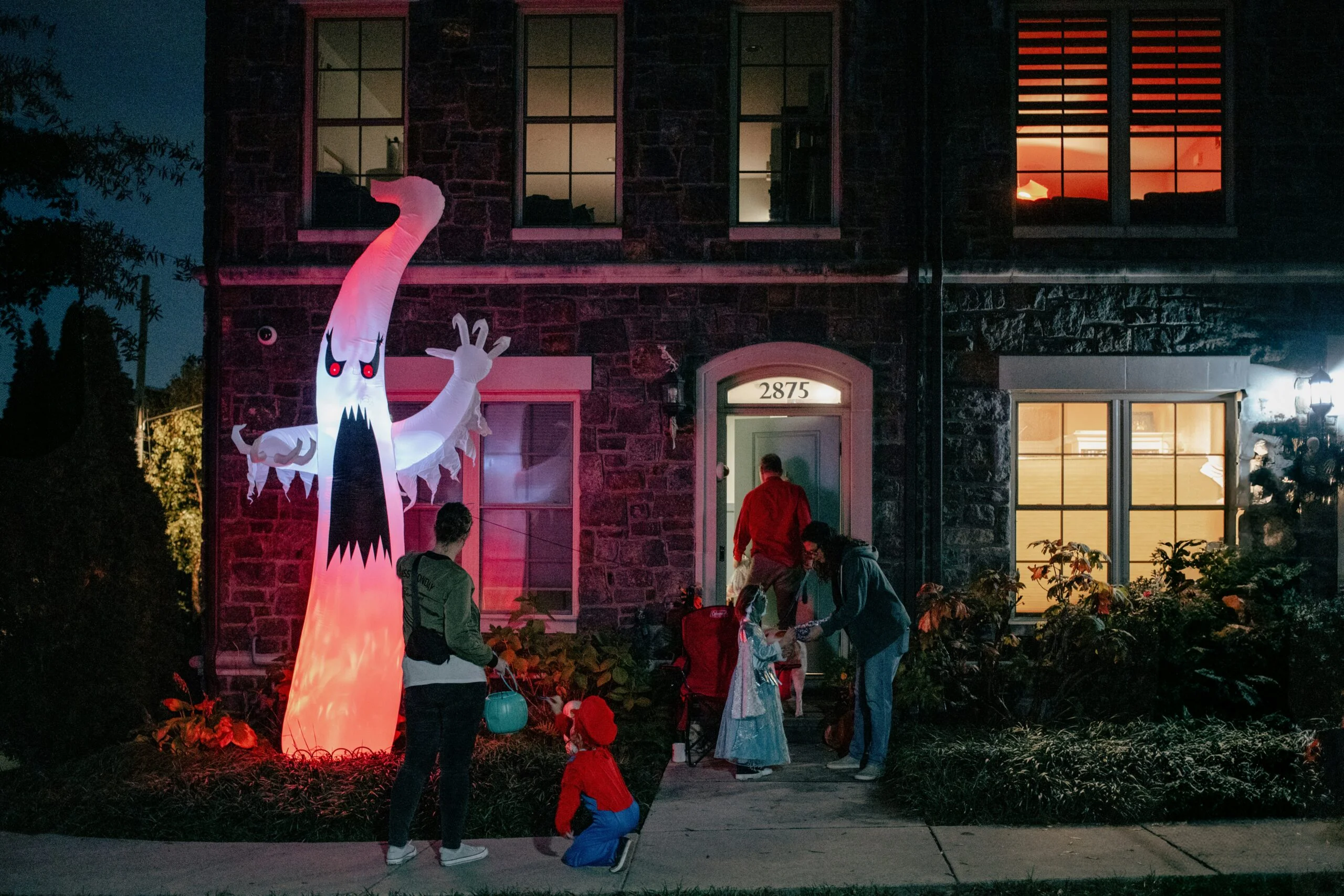
If a driver, homeowner, or party host’s carelessness injures you or your child on Halloween, they may be legally responsible. California drivers must yield to pedestrians in crosswalks and use due care around them, and property owners must use reasonable care to prevent injuries. Document everything, get medical care, and mind the filing deadlines.
Halloween is fun, but it puts excited children on dark streets at the same hour many drivers are heading home. This guide covers who may be liable when something goes wrong, what to do next, and how to cut the risk this year. It’s written for families in Los Angeles and California counties. Halloween 2026 falls on Saturday, October 31.
Why Is Halloween Night Riskier for Child Pedestrians?
Because many children are walking, in costume, in the evening, among cars that are also on the road. The National Highway Traffic Safety Administration (NHTSA) urges drivers to watch for trick-or-treaters in unexpected places, to slow down, and to remember that children may not notice traffic and may dart into the street. NHTSA also reports that in 2023, nearly half of all crash fatalities on Halloween night were alcohol-related.
Research points the same way. A 2019 study in JAMA Pediatrics of NHTSA data from 1975 to 2016, as reported by Wisconsin Public Radio, found 608 pedestrian deaths across 42 Halloween evenings, compared with 851 across 84 comparison evenings. That works out to roughly 43 percent higher overall, with the biggest jump among children ages 4 to 8. Those are national figures, not a prediction for your street.
What Duties Do Drivers Owe Pedestrians on Halloween?
Drivers must yield to pedestrians in crosswalks and use due care at all times. Under Vehicle Code § 21950, the driver of a vehicle must yield the right-of-way to a pedestrian crossing within any marked crosswalk or within an unmarked crosswalk at an intersection. The statute also requires drivers to use due care and slow down or take other action as needed to keep pedestrians safe.
Pedestrians have duties too. They may not suddenly leave a curb or other safe place and walk into the path of a vehicle that is so close it is an immediate hazard. But that duty does not excuse a driver from using due care. A driver who speeds through a neighborhood, looks at a phone, or drives impaired may be found negligent even when a child steps out unexpectedly.
For a deeper look at the everyday rules, see our guides on whether pedestrians have the right of way and pedestrian laws in California, or our pedestrian accident practice page. If the driver left the scene, see our page on hit-and-run accidents.
Who Is Liable for a Trick-or-Treat Accident?
Anyone whose carelessness caused the injury may be liable, and more than one party can share responsibility. Under Civil Code § 1714, people are generally responsible for harm they cause others through a lack of ordinary care in managing their property or their own conduct. Depending on the facts, that can include:
| Who | Example (hypothetical) |
|---|---|
| A driver | Speeding, distracted, backing out of a driveway without looking, or impaired |
| A homeowner | An unlit, cracked, or cluttered walkway; loose railing; a hazardous decoration |
| A business or event host | A “trunk-or-treat” lot, pumpkin patch, or party with poor lighting or crowd control |
| A party host or venue | A guest hurt by an obvious hazard that the host failed to fix or warn about |
| A dog owner | A dog that bites a visitor |
Keep the key term in mind: premises liability is a property owner’s legal responsibility for injuries caused by unsafe conditions on their property. Learn more on our premises liability page.
Can a Homeowner Be Liable If a Trick-or-Treater Gets Hurt?
Yes, it can happen. Imagine a trick-or-treater falls on a broken, unlit step the homeowner never fixed or warned about. A claim would turn on what a reasonably careful owner would have done, whether the danger was foreseeable, and what the visitor could have seen. Homeowner’s insurance often responds, but insurers dispute these claims, so evidence matters.
Common issues include broken steps, poor lighting, cords across walkways, and crowded party spaces. See our slip, trip, and fall information.
What About Dog Bites on Halloween?
Dog owners in California are strictly liable for bites. Civil Code § 3342 makes a dog’s owner liable for damages when the dog bites someone in a public place or lawfully in a private place, including the owner’s own property, “regardless of the former viciousness of the dog or the owner’s knowledge of such viciousness.” Being on the property by the owner’s express or implied invitation counts as being lawfully there. Keep dogs secured on Halloween.
What Happens If My Child Was Partly at Fault?
California reduces recovery by the injured person’s share of fault but does not necessarily bar it. Civil Code § 1714 provides that liability is reduced when the injured party’s own lack of care contributed to the harm. We explain how it works in our guide to comparative negligence in California.
For children, the bar is lower than for adults. Under the Judicial Council’s jury instruction (CACI No. 402), a child is judged by what a reasonably careful child of similar age, intelligence, knowledge, and experience would do in the same situation, and children under five are treated as incapable of contributory negligence. Insurers may still argue that a child darted out or that supervision was lacking, so it is wise to talk with a lawyer before giving any statement.
What Should You Do After a Halloween Accident?
Put safety and medical care first, then document. Follow this checklist:
- Call 911 for any serious injury, and move children out of the roadway.
- Get medical care the same night or next morning, even if injuries seem minor. Head injuries can show up later; see our page on brain injury claims.
- Call the police for any crash and ask for the report number.
- Photograph everything: the scene, the vehicle and license plate, the walkway or hazard, lighting conditions, and visible injuries. Costumes and torn or damaged items matter too.
- Collect names and phone numbers for the driver, homeowner or host, and witnesses.
- Save evidence: neighbors’ doorbell or security-camera footage, party invitations or event posts, and text messages. Video is often overwritten within days, so ask quickly.
- Keep every record: medical bills, school and work absences, and receipts.
- Be careful with insurers. Don’t give a recorded statement or sign a release before you understand your injuries.
Our guides on what to do after a pedestrian accident and what to do after a car accident offer additional detail.
How Long Do You Have to File a Halloween Injury Lawsuit?
Most personal injury lawsuits must be filed within two years of the injury under Code of Civil Procedure § 335.1. See our overview of the personal injury statute of limitations. For a Halloween 2026 injury, that general deadline would fall around October 31, 2028, but exact dates depend on the facts, so check with an attorney rather than counting on your own calculation.
Special rules apply when the injured person is a child. Under Code of Civil Procedure § 352, the time during which a person is under the age of majority is generally not counted toward the filing deadline. This “tolling” does not apply to claims against public entities, which are governed by separate government-claim rules and much shorter deadlines. A parent’s own claim, such as for medical expenses, may not receive the same extra time. Don’t wait: evidence disappears, and witnesses forget.
Does a Child’s Injury Settlement Need Court Approval?
Yes. In California, a court must approve a settlement of a minor’s claim before it becomes binding. The Fresno Superior Court’s minor’s compromise guidance explains that the process involves a petition (Judicial Council form MC-350), a doctor’s report on the child’s injury and condition, and a hearing. Approved funds are often placed in a protected account or annuity and can only be withdrawn with court authorization. The rules cite Code of Civil Procedure § 372 and Probate Code § 3500, among others. The purpose is to protect the child’s money.
How Can You Reduce the Risk This Halloween?
A few simple habits help. These tips come from NHTSA’s Halloween guidance:
- Drivers: Watch for trick-or-treaters in unexpected places, slow down, and scan the road. Never drive impaired.
- Trick-or-treaters and parents: Set up a buddy system so no one walks alone, follow traffic rules and signals, and cross at crosswalks or intersections when possible, looking for cars from all directions, including turning vehicles.
- Homeowners: Light the walkway, repair steps and railings, clear cords and clutter, and secure pets.
- Costume choices (our practical suggestion): Reflective tape or glow items help drivers see children, and masks that block vision are a poor idea near streets.
Frequently Asked Questions
Who is liable if a child is hit by a car while trick-or-treating? The driver may be liable if they failed to yield in a crosswalk or failed to use due care. Other parties, such as a property owner with a dangerous condition near the road, may share responsibility depending on the facts.
Can I sue a homeowner if my child is injured at their house on Halloween? Possibly. California homeowners must use reasonable care in managing their property. If an unsafe condition they knew or should have known about caused the injury, they may be liable, and homeowner’s insurance may respond.
Are dog owners liable for bites on Halloween? Often, yes. Under Civil Code § 3342, a dog owner is generally liable when the dog bites someone in a public place or lawfully on private property, regardless of whether the dog had been dangerous before.
How long do I have to file a lawsuit for a child’s Halloween injury? The general deadline is two years, but California law generally doesn’t count the time a person is a minor toward that deadline for the child’s own claim. Claims against government entities follow different, shorter rules, so speak with an attorney promptly.
Does a child’s settlement have to be approved by a judge? Yes. A court must approve a settlement of a minor’s claim, and the funds are typically protected until the child is older.
What if my child ran into the street without looking? You may still have a claim. California reduces recovery by a person’s share of fault but doesn’t bar it, and a child is judged by the standard of a reasonably careful child of similar age and experience.
Injured on Halloween? Talk to Mesriani Law Group
A holiday injury is upsetting, especially when a child is involved. The personal injury attorneys at Mesriani Law Group represent injured people throughout Los Angeles, Orange, Ventura, San Bernardino, Riverside, San Diego, and Santa Barbara counties, and we work on a contingency basis, so you pay no attorney’s fee unless we win. Learn how that works in our guide to contingency fee attorneys, or visit our car accident claim page.
Call (866) 500-7070, request a free consultation, or contact us online.
Sources
- National Highway Traffic Safety Administration, Halloween Safety Tips
- Wisconsin Public Radio, Studies show pedestrian fatalities are much higher on Halloween, especially among children (reporting on JAMA Pediatrics, 2019)
- California Vehicle Code § 21950, public.law
- California Civil Code § 1714, public.law
- California Civil Code § 3342, public.law
- California Code of Civil Procedure § 352, text
- Superior Court of California, County of Fresno, Minor’s Compromise
- Judicial Council of California, CACI No. 402 (Standard of Care for Minors), text via Justia
This blog post is for informational purposes only and does not constitute legal advice. Reading it does not create an attorney-client relationship. Past results do not guarantee or predict a similar outcome in any future case.